
Last updated November 21, 2026
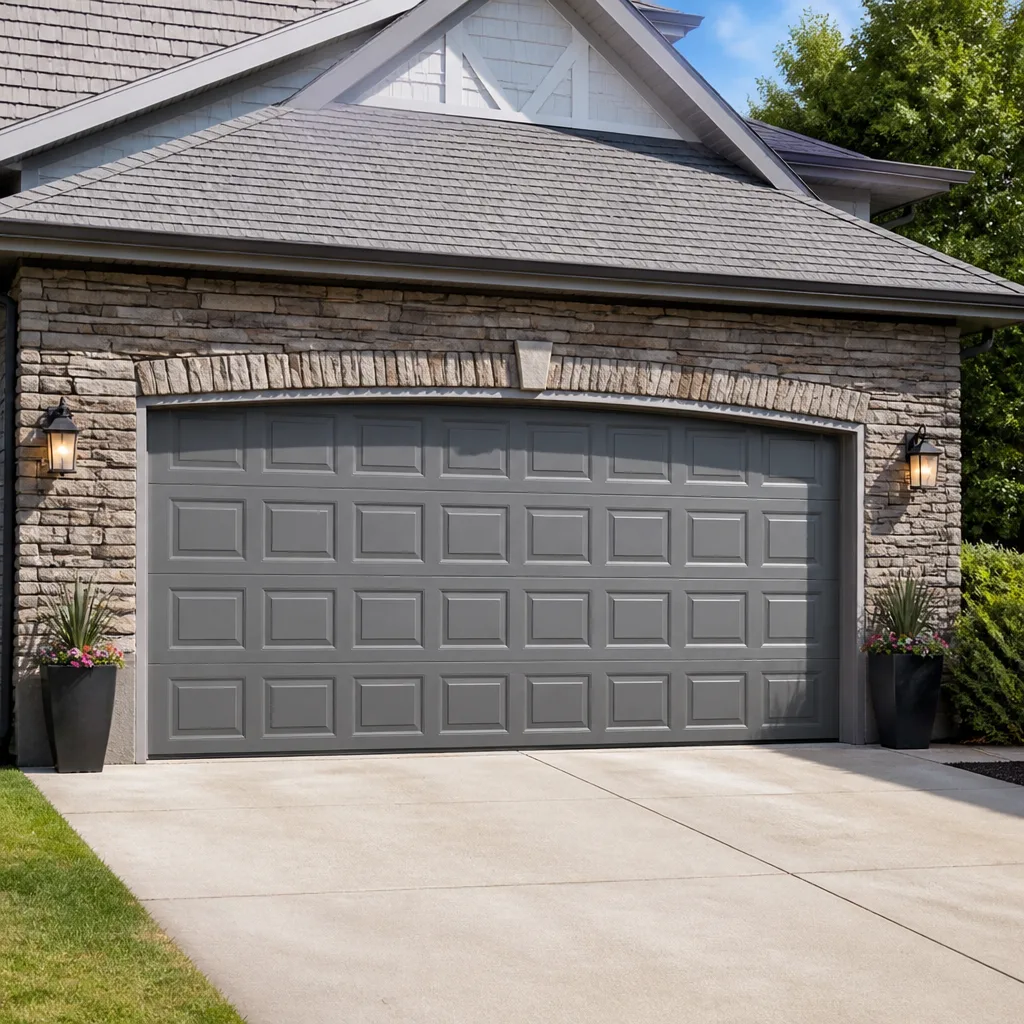 Raised-panel steel
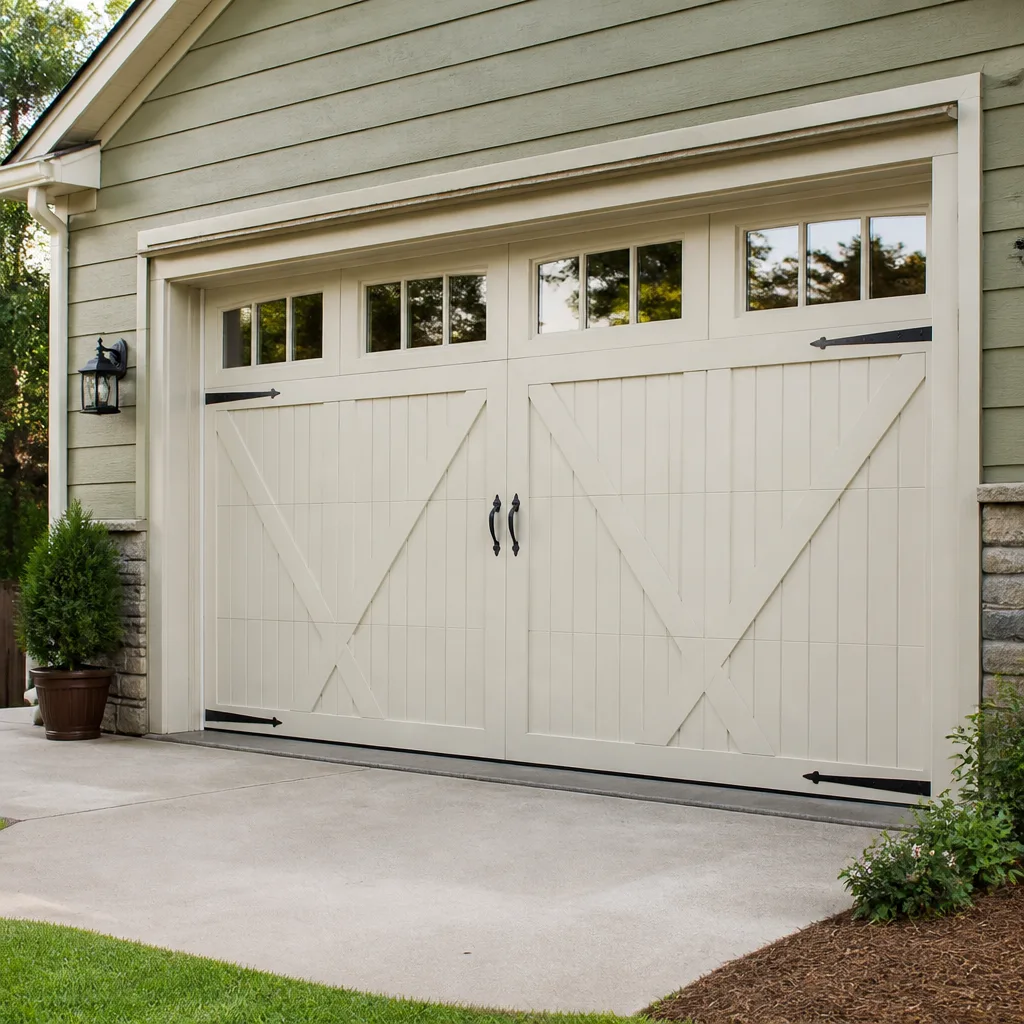 Carriage house
 Modern flush
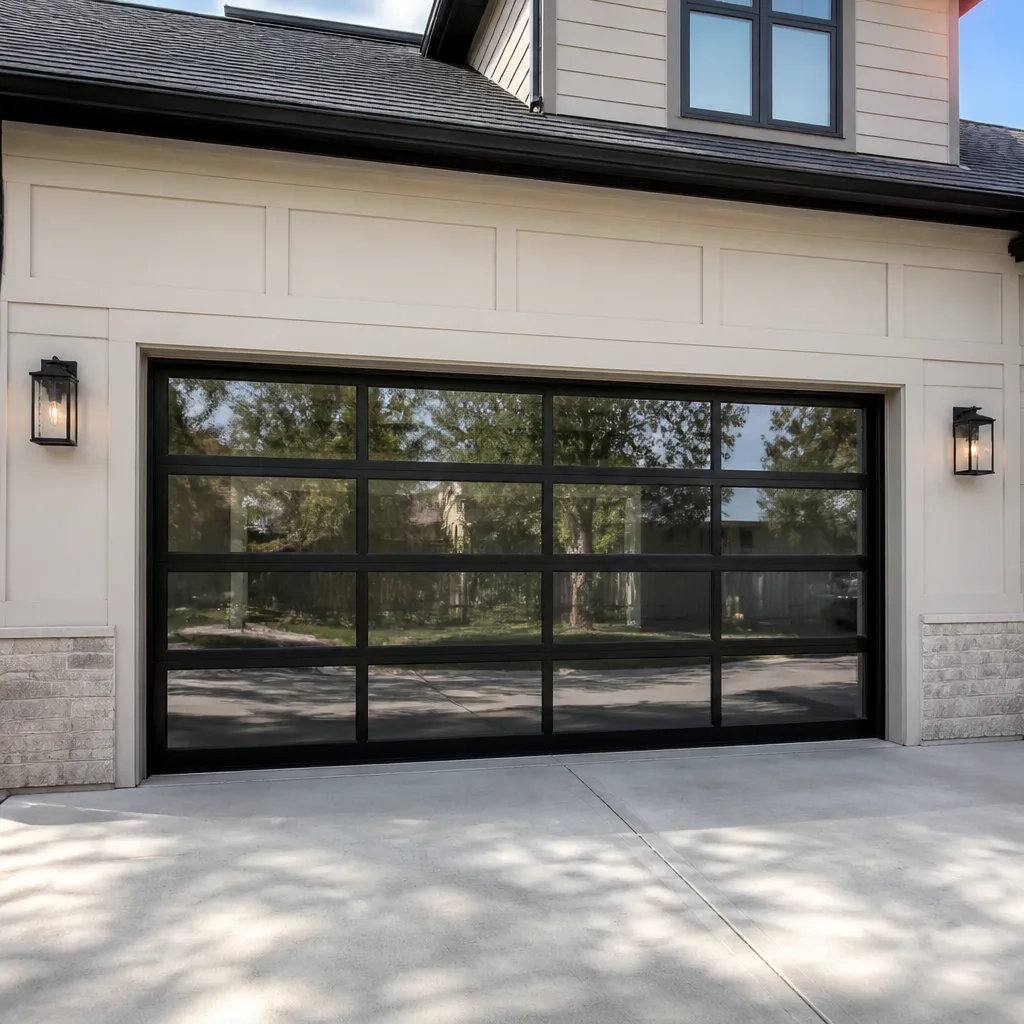 Full-view glass
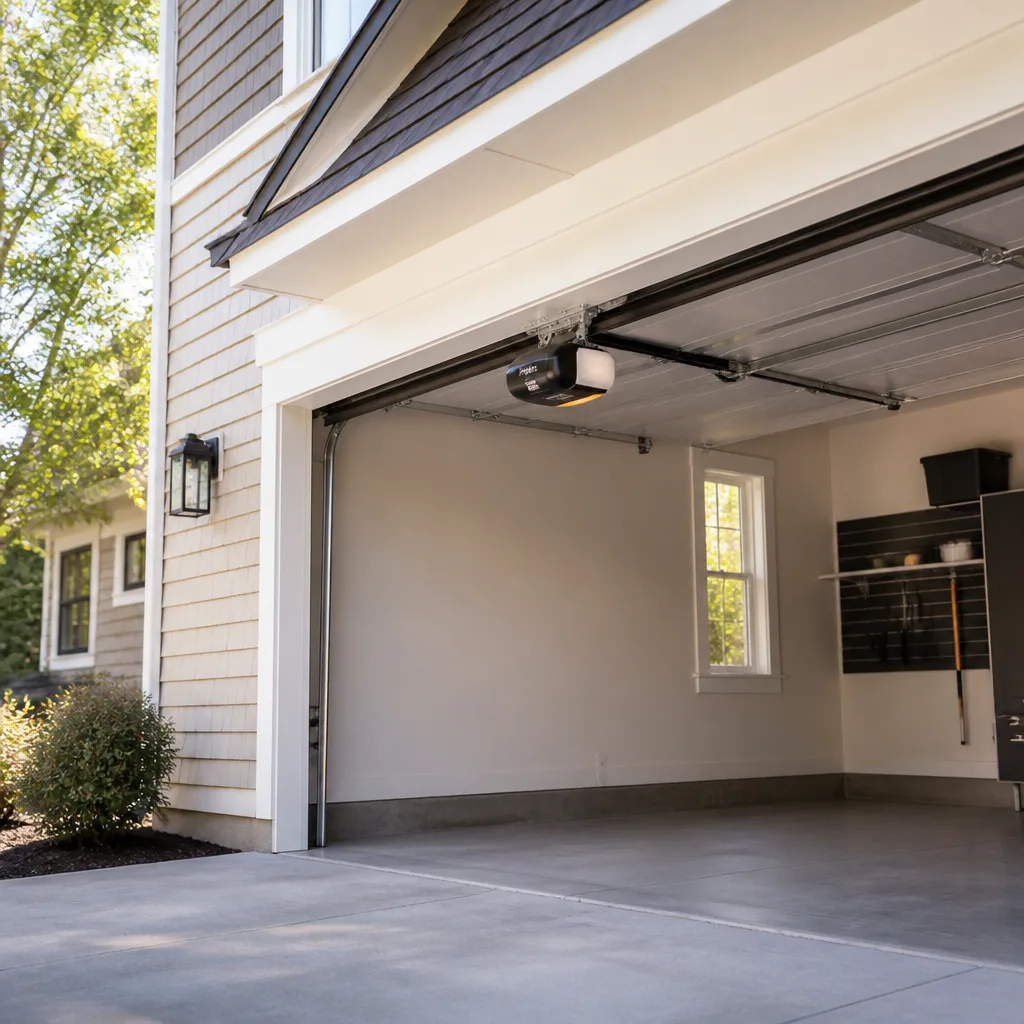 LiftMaster openers
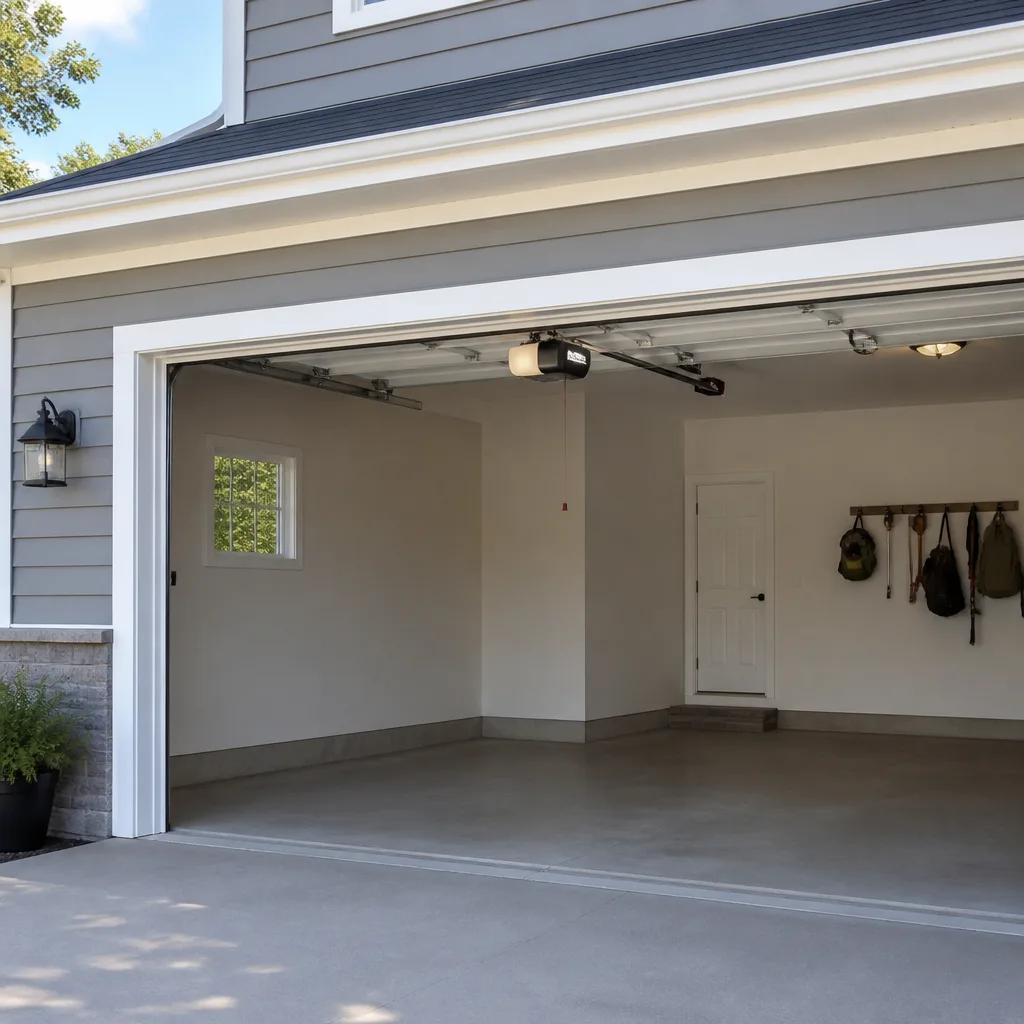 Chamberlain openers
Full 25-point door and opener safety check with every visit - springs, cables, rollers, tracks, and your LiftMaster or Chamberlain opener included
You get a price before we start. It does not change when the pro arrives.
Get your free estimateDIY vs Professional Garage Door: The Fairfield Homeowner’s Decision Guide
Most homeowner forums treat garage door work as one all-or-nothing decision, and that’s where people get hurt. The truth is that a garage door is a stack of very different jobs bolted together. Replacing a torn bottom seal is a screwdriver task you can finish before your coffee cools. A torsion spring under load is a stored-energy device that can break a wrist or worse if you release it the wrong way. Between those two extremes sits a wide middle: tasks that are safe to try, tasks that need tools and math most people don’t have, and tasks where a manufacturer’s warranty quietly hangs in the balance. This guide gives you a clear line between the three so you know what’s genuinely DIY in Fairfield and what isn’t.
Quick Answer
Some garage door tasks are legitimate DIY, and others should never be attempted regardless of how handy you are. Weatherstripping, lubricating hardware, tightening bolts, cleaning photo-eye lenses and reprogramming a remote are safe for most Fairfield homeowners. Anything involving torsion springs, the cables that run beside them, or the high-voltage wiring inside an opener should go to a trained technician, both because of injury risk and because poor work can void your opener or door warranty. Limit adjustments and parts sizing on openers and springs fall in the middle: they look simple and aren’t.
Styles & brands we work with
- Raised-panel steel
- Carriage house
- Modern flush
- Full-view glass
- LiftMaster openers
- Chamberlain openers
Table of Contents
- The task-by-task breakdown
- Why torsion springs and cables are in a category of their own
- The Connecticut liability question for DIY spring work
- How DIY opener work can void your warranty
- Parts sourcing in Fairfield: why the box store spring may be the wrong size
- When a failed DIY attempt costs more than calling first
- When to call a professional
The Task-by-Task Breakdown
The right question isn’t “can I fix a garage door?” It’s “can I fix this specific part of this specific door?” Garage door work divides cleanly into three tiers based on injury risk, tool requirements, and warranty consequences. Here’s how we think about each when a Fairfield homeowner calls us with a problem.
Tier 1 – Safe for most homeowners:
- Replacing the bottom weather seal (the rubber strip that touches the floor when the door closes)
- Applying lubricant to hinges, rollers and tracks
- Tightening loose hinge bolts and track brackets with a socket set
- Cleaning photo-eye lenses so the door stops reversing on phantom obstructions
- Reprogramming a remote or HomeLink in the car
- Clearing small debris from the track
Tier 2 – Needs professional tools and calculations, not necessarily a specialist:
- Replacing limit switches on an opener (the mechanism that tells the motor when to stop)
- Adjusting open and close travel limits
- Replacing a roller that has cracked or flattened
- Straightening a minor bend in a track
Tier 3 – Never DIY, regardless of skill level:
- Replacing torsion springs
- Replacing or adjusting the lift cables that run alongside the springs
- Replacing extension springs (older doors)
- Working on the opener’s electrical panel or any high-voltage wiring
- Replacing bottom brackets attached to cables under tension
- Replacing a torsion tube or drum
The Tier 2 line matters in Fairfield because most homeowners don’t have a torque spec chart or the calibration tools to do limit adjustments correctly. And a misadjusted limit can strip the opener gear, which turns a small fix into an opener replacement.
How a typical Tier 1 job goes
Weatherstrip replacement illustrates the wide gap between a DIY task and a professional one. You buy a new seal of the right profile, open the door, remove the old weatherstrip from the bottom channel, press the new one in, and test the door’s closure. Most Fairfield doors use a standard U-shaped or T-shaped seal that slides into a channel at the bottom rail. It’s a 20-minute job with a step stool and no risk beyond pinching a finger. That’s the kind of task the DIY question actually covers.
How a typical Tier 3 job goes
Torsion spring work requires specialty winding bars, an understanding of door weight and spring sizing, and the discipline to know which way the springs wind. A technician measures door height and weight, calculates the correct spring size for the specific door, releases the old spring using the winding bars, installs the new springs, and re-tensions the system. That’s the process we go through on a garage door spring repair job in Fairfield. If any of that description sounds like something you’d read instructions for and safely execute, you’re underestimating the stored energy in the system. Every spring we’ve ever seen fail in Fairfield has done so with violent force.
Why Torsion Springs and Cables Are in a Category of Their Own
Torsion springs are wound steel under hundreds of pounds of tension at rest. That’s not a figure of speech. A residential torsion spring on a standard single-car door stores enough energy that releasing the wrong bolt at the wrong time sends metal flying across the garage. It’s the reason we classify spring work as Tier 3 and treat it like electrical panel work: technically understandable, but genuinely dangerous to do without training.
The cables beside the springs are equally serious. They run from bottom brackets up to the drums at the top of the door and hold the door’s weight in tension. When a cable snaps under load, it can whip through the garage. The failure modes people worry about are real; the ones nobody talks about – working on the door’s bottom bracket while the lift cable is under tension – are the ones that send people to the emergency room with hand injuries.
What a trained technician does differently:
- Measures door weight before selecting the spring. Spring size is a calculation, not a guess.
- Uses proper winding bars that fit the torsion tube exactly, instead of substitutes like screwdrivers or hex keys. The wrong tool slips, and slipping is where injuries happen.
- Follows a specific winding sequence determined by the door’s weight and hinge count.
- Tests the door’s balance after installation before returning the door to service.
The good news is that once a spring is properly installed, most of the remaining door hardware is safe to touch. The bad news is that the spring is the first thing that breaks, and it’s the last thing you want to try to fix yourself. If you suspect a broken spring – the door is dead heavy, sits halfway up, or you hear a loud bang from the garage – stop pulling the opener and call a professional to look at the door before anything else fails.
The Connecticut Liability Question for DIY Spring Work
Homeowners rarely think about this, and it’s one of the strongest arguments for professional spring work on a property where other people regularly use the garage. If a DIY spring or cable failure causes an injury to a guest, a delivery worker, a renter or a neighbor’s child who happened to be in the driveway, and the failure originated from work you did yourself, you’re exposed to a much less favorable liability picture than if the work was done by a trained technician.
That exposure is mostly about what your homeowners insurance asks in the event of a claim. Standard policies ask who performed the work and whether they were qualified. If the answer is “the homeowner, following a video”, the insurer’s response is not guaranteed to be the one you’re hoping for. In practice, Fairfield homeowners who rent out a property, who host family often, or who live in neighborhoods with busy driveways hit this risk far more than they realize.
The other piece is a straightforward everyday point: a garage door that has been worked on incorrectly can fail later, without warning, often when the door is moving. If a spring lets go while your daughter is stepping into the car, the injury risk is the same as if you were standing there. What you owe the people who share your home is a door that’s been properly sized, installed and tested.
Professional service also removes this concern entirely. When work is done by a trained technician, and the installation follows the manufacturer’s specifications for the door and opener you have, the responsibility for the work is well-defined. That’s not a legal argument – it’s a practical one.
How DIY Opener Work Can Void Your Warranty
Every major residential garage door opener brand – LiftMaster, Chamberlain and Genie among them – sends its warranty terms with a phrase most homeowners skim past: “professional installation required” or “professional service recommended”. Those phrases are not marketing. They’re the manufacturer’s line where the warranty coverage ends if you’ve been inside the unit yourself.
The clauses generally cover the motor and internal electronics, not the accessories. What this means in practice:
- Reprogramming a remote, HomeLink, or a keypad is done entirely outside the opener housing and doesn’t affect the warranty.
- Adjusting open/close travel limits from the control panel is usually permitted for the homeowner, but if a misadjustment strips the internal gear, the manufacturer may decline the warranty claim.
- Opening the opener housing to service a cracked gear or replace a logic board yourself is where warranties get voided. Once you’re inside the unit, the paperwork assumes a trained technician.
- Replacing the opener wiring to the wall controls touches low-voltage wiring, which is safe; replacing the power lead is a different situation and shouldn’t be DIY.
A specific and common Fairfield scenario: a homeowner notices their LiftMaster is reversing at the floor, opens the panel to fiddle with the travel limits, and turns a 15-minute limit adjustment into a service call for a stripped gear or jammed trolley. The repair goes from an inexpensive garage door opener repair visit to something that costs more than the adjustment would have, and the manufacturer’s warranty may not cover the outcome. The math almost never works in the homeowner’s favor.
Parts Sourcing in Fairfield: Why the Box Store Spring May Be the Wrong Size
Here’s a part of the DIY conversation that goes almost entirely unmentioned in the typical video. Torsion springs are sized for a specific door weight and height combination. Big-box retailers sell a small handful of common sizes, generically labeled for “7-foot door” or “8-foot door.” Those labels don’t account for the actual weight of the door they’ll be installed on – which depends on panel construction, insulation, glass and the width. A door labeled “7-foot” but built with insulated panels can weigh several times what a basic non-insulated door weighs.
The math matters because it’s not a tool problem – it’s a calculation problem. Two Fairfield doors of identical height can call for very different spring sizes. Installing the wrong size is not a “it’ll be close enough” situation. The wrong spring will:
- Overwork the opener and shorten its life
- Cause the door to close too heavy or too fast
- Fail prematurely, often within months
- Leave the door unbalanced, which accelerates wear on the hinges, rollers and tracks
Sizing a spring correctly means knowing the door’s weight (which gets calculated from the panel count and material), the track radius, hinge location and the drum size. That’s why a box-store spring works fine for some doors and fails for others, and there’s no way to know which category you’re in until you’ve measured.
There’s a similar wrinkle with openers. If you buy a replacement LiftMaster, Chamberlain, Genie, Craftsman or Raynor opener off a shelf, the unit itself is usually correct, but the installation parameters – the force settings, the rail length, the safety reversal test – need to match your specific door. Getting those wrong voids the manufacturer’s warranty and diminishes the opener’s safety features. That’s the specific advantage of working with a technician who has serviced your brand before: the installation is done to the manufacturer’s spec, not guessed.
When a Failed DIY Attempt Costs More Than Calling First
We’ve seen the same pattern again and again: a homeowner starts what looks like a simple repair, discovers the job has three more steps than the video showed, and ends up needing more work than if they’d called a technician from the start. The pattern is predictable enough to name.
- Partial disassembly of the spring system. A homeowner removes one spring and gets stuck on the second one. Now there’s an unbalanced door with one spring installed, and the technician has to remove and reinstall both, adding labor the original repair wouldn’t have needed.
- Stripped opener gears after a DIY limit adjustment. The opener is dissembled, the gear strips out, and what should have been an inexpensive dial-in becomes an opener service visit or replacement.
- Bent tracks from a door that came down off its rollers. Attempting to straighten the track without the right plyers or alignment tool usually makes it wavy, and the door refuses to travel smoothly afterward.
- Mis-sized spring installation that fails during the balance test. The door works briefly and then fails again, and the second call-out costs more because the first attempt introduced extra wear.
- Electrical wiring shortcuts on a wall control. A homeowner adds a wall button and mis-wires it, leaving the opener intermittent – a problem that turns a safe, tested installation into a diagnostic job.
None of those outcomes are catastrophic. They’re just more expensive than the version where you called first. Fairfield Garage Door Repair Pros offers a free estimate, so there’s no cost to finding out whether the task you’re about to attempt is genuinely Tier 1 or whether you’re about to make the job harder. The estimate itself is always free and the price is set per job by the written quote – no surprises at the end.
When to Call a Professional
The list is shorter than most homeowners expect. Call a professional when:
- A torsion or extension spring has broken or is visibly bowed
- The door is stuck halfway, hangs unbalanced, or won’t lift by hand
- A lift cable or bottom bracket is visibly damaged, frayed or slack
- The opener’s internal mechanism appears to be failing – it grinds, clicks loudly, or the motor runs but the door doesn’t move
- You need a full door replacement, installation, or opener replacement
- The door has been damaged in a way that affects its structure (dents on more than one panel, a bent track, a broken door section)
Any of those warrant a trained technician because the consequences of a bad repair range from injury to an opening that fails on a Sunday morning with the car inside. Fairfield Garage Door Repair Pros offers free estimates in Fairfield – call (877) 584-2814 to set one up. We answer 24/7. Fast dispatch from 7am to 7pm, Sunday through Friday. If the call comes outside our dispatch hours, we’ll book it into the next opening.
We work on the brand you already have – LiftMaster, Chamberlain, Genie, Craftsman, Raynor, Clopay, Amarr, and Wayne Dalton – so you don’t need to switch brands to get service. Our technicians have up to 13 years of experience on garage doors, and every job we take is a garage door job. No crew being pulled off another trade, no jack-of-all-trades.
See the difference
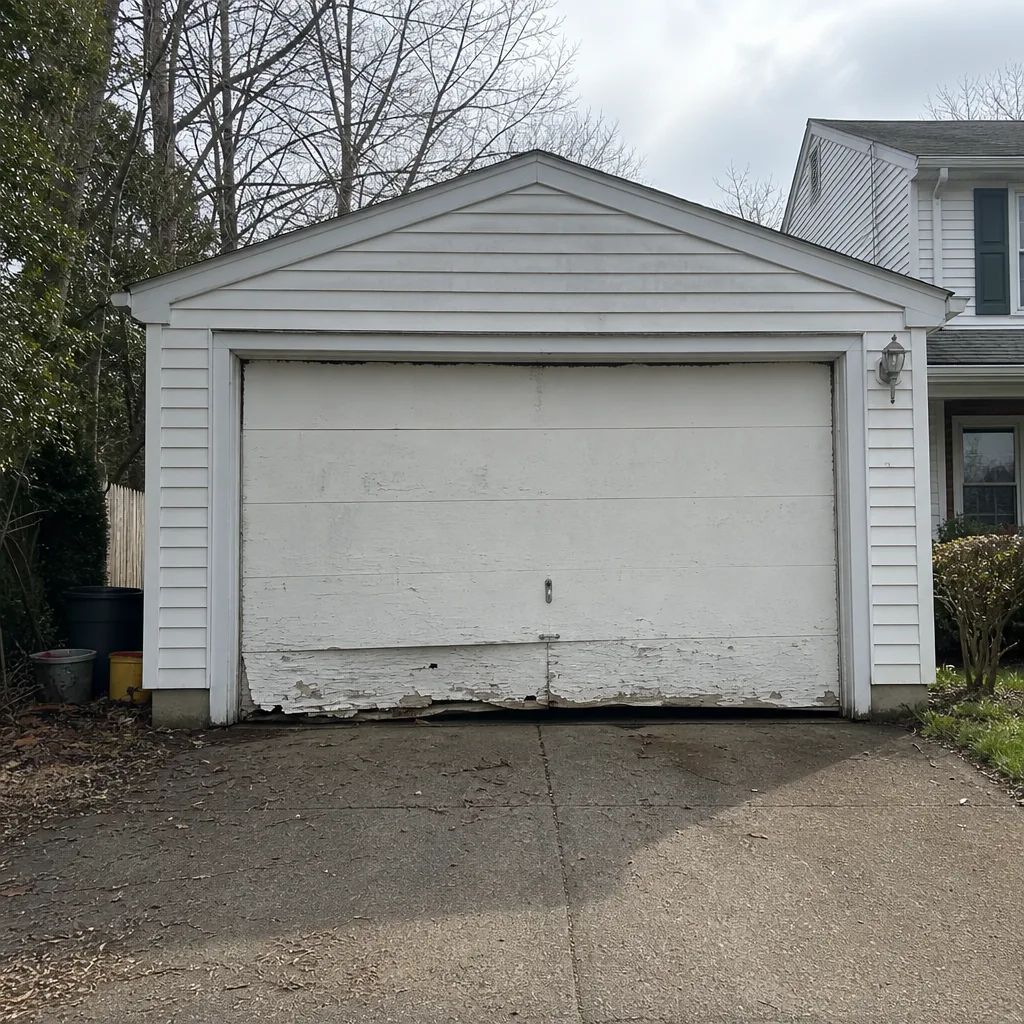 Before
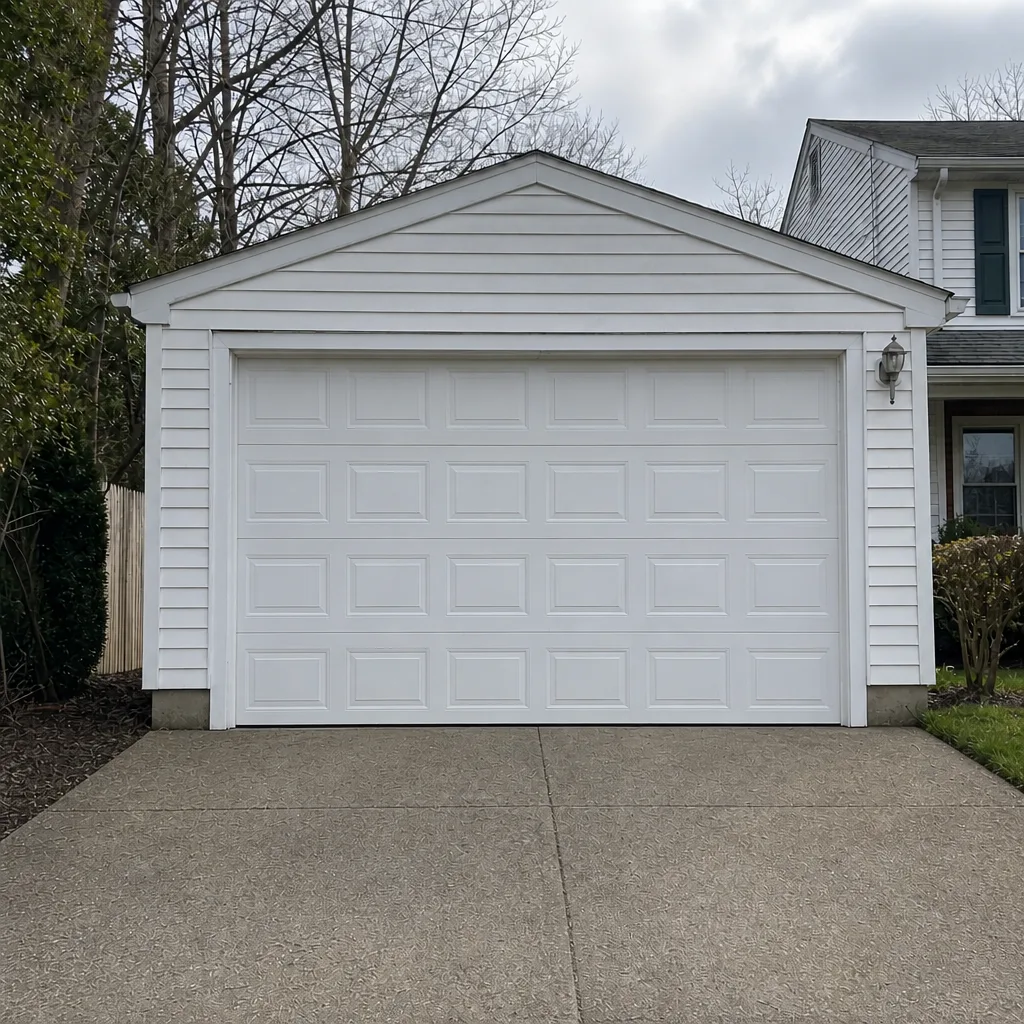 After
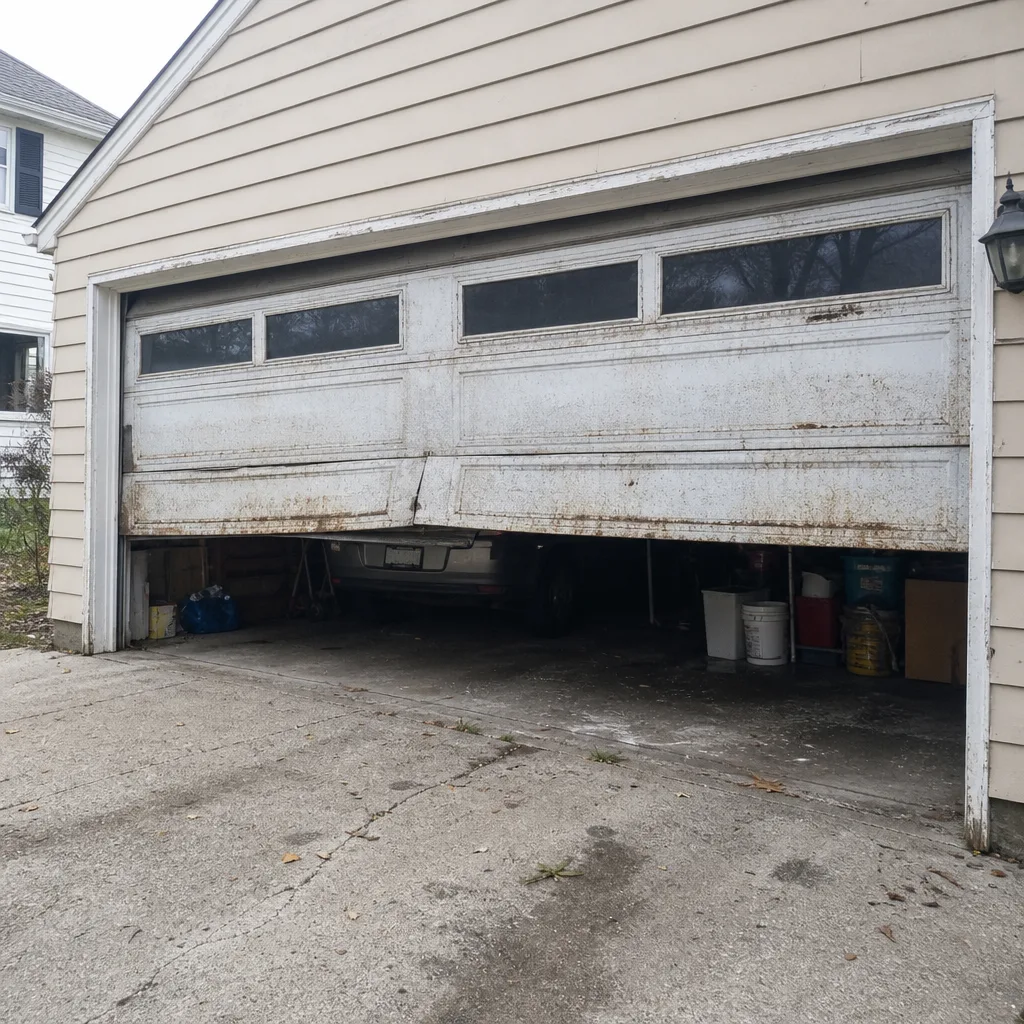 Before
 After
 Before
 After
Common Mistakes to Avoid
- Releasing spring tension without the right winding bars. Substitutes like screwdrivers, hex keys or vice grips are the number one source of DIY spring injuries in Fairfield and everywhere else. The tool slips, the spring unwinds, and the failure is fast.
- Buying a “one-size” spring because the label says it’s for your door height. Height alone doesn’t determine spring size – door weight does. Insulated and glass-panel doors in Fairfield routinely get mismatched with the wrong spring size off a shelf.
- Adjusting opener travel limits without reading the manual first. Limit switches control where the door stops, and a small adjustment in the wrong direction strips gears. If you can’t find your manual, don’t touch the controls.
- Bending a track back into shape by eye. A track that’s even slightly out of line will wear the rollers and eventually cause the door to jam. Track geometry is a real spec, not a visual guess.
- Servicing the opener housing yourself. Opening the unit does void LiftMaster, Chamberlain and Genie warranties. That’s the trade-off on a component that’s easy to break and expensive to replace.
- Replacing a spring once and not the pair. Springs wear together. Installing one new spring on a door with two matched springs creates a balance problem, and the old spring usually fails soon after.
- Ignoring a grinding or clicking opener until it dies. Grinding usually means a failing gear or a stripped sprocket. A quick repair prevents a motor replacement, and in Fairfield the humidity and temperature swings of the summer make it a matter of time. If you’re hearing the noise, call before it turns into a stuck door.
Frequently Asked Questions
You can physically attempt it, but you shouldn’t, and we strongly recommend against it. Torsion and extension springs are under high tension at rest and can cause serious injury if released improperly. Fairfield homeowners should call a trained garage door technician for any spring work. If you’re not sure whether your spring is broken, call for a free estimate – that costs nothing, and it keeps you out of the danger zone.
Opening the opener housing or performing internal repairs yourself typically voids the manufacturer’s warranty on the motor and electronics. Reprogramming remotes, cleaning photo-eye lenses and adjusting travel limits from the control panel are generally outside the housing and don’t affect coverage. If a repair needs internal access, it’s a technician job. Call (877) 584-2814 for an estimate before you open the unit.
Weatherstrip replacement, hardware lubrication, bolt tightening, photo-eye cleaning and remote programming are safe DIY tasks for most Fairfield homeowners. They require basic hand tools and no access to springs, cables or the opener’s internal mechanism. Anything beyond that needs a technician. When in doubt, ask us before you start – the estimate is free.
The door will usually stay shut and the opener won’t lift it. That’s actually normal, not a sign of a bad door – the opener is designed not to fight the door’s weight. Call us for same-day repair; we answer 24/7 and dispatch from 7am to 7pm. Attempting to lift the door by hand after a spring break is often unsafe; we recommend leaving it until a technician can look at it.
Because the sizing on shelf labels is generic, and spring size depends on the door’s actual weight, not its height. Two Fairfield doors of the same height can require different springs if one is insulated and one isn’t. A technician calculates the correct spring size based on door weight and hardware before installing. For an exact quote, call (877) 584-2814 – estimates are free.
The local professionals we connect you with are licensed and insured as their state requires, so the work and the property are covered. That’s a meaningful difference from DIY, where any injury or warranty issue rests with you. To schedule professional service, call (877) 584-2814.
The Bottom Line
The DIY-or-professional question for a garage door isn’t a test of your capability – it’s a test of which tasks are safe and which aren’t, and the line between them is clear. Weatherstripping, lubrication, cleaning photo-eye lenses and programming remotes are fair game for any Fairfield homeowner with basic tools. Anything involving torsion springs, lift cables, bottom brackets or the internal wiring of an opener belongs to a trained technician, both for the injury risk and for the sake of your manufacturer’s warranty. The middle ground – limits, rollers, tracks – is where calling first saves money. Fairfield Garage Door Repair Pros is garage doors only, works on every major brand you might already own, and offers free estimates before any work starts. If you’re not sure which side of the line your problem is on, we’re the ones to ask.
Call (877) 584-2814 for a free estimate. We answer 24/7. Fast dispatch from 7am to 7pm, Sunday through Friday.
Written by the team at Fairfield Garage Door Repair Pros.