
Top Signs You Need Garage Door Service – Don’t Ignore These
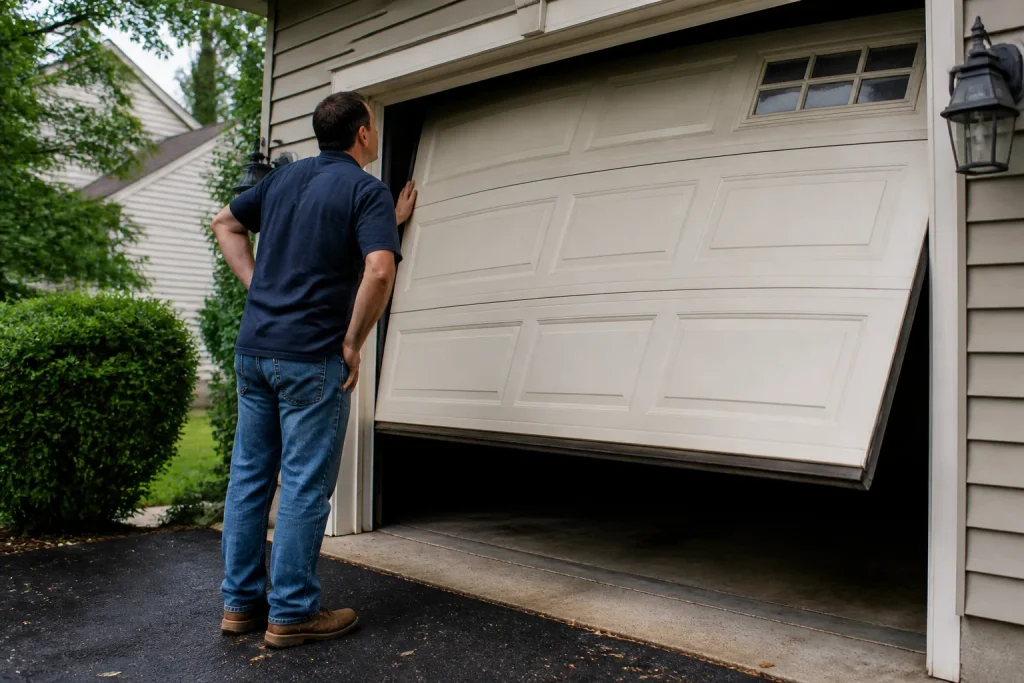
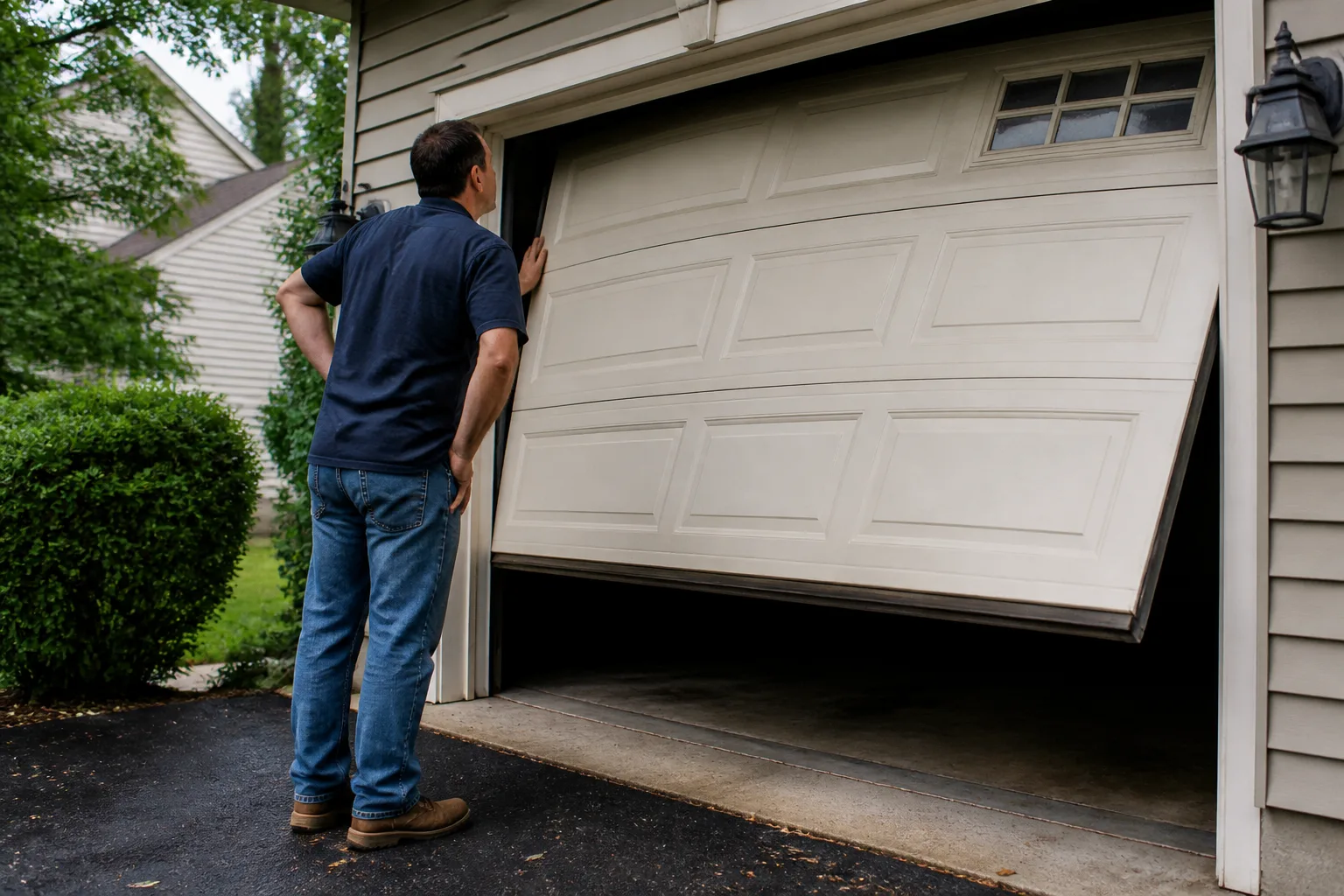
A garage door that takes two seconds longer to open than it did six months ago isn’t aging gracefully. It’s telling you the opener is compensating for a mechanical problem that will eventually exceed the motor’s force limit and either snap a cable or burn out the drive gear. Most homeowners wait for something to break before they call anyone. The trouble is that the warning signs are there long before the break, and they’re mechanical and measurable, not vague feelings that the door “seems slow.”
Below are the specific tests and thresholds we use to separate normal wear from a component that’s about to fail dangerously. If you’d rather not climb a ladder and time your door yourself, call (877) 584-2814 for a free estimate.
The Manual Balance Test: The One Check Every Fairfield Homeowner Should Know
Close the door, pull the emergency release cord to disconnect the opener, then lift the door by hand to about waist height and let go. A properly balanced door stays put. If it drifts more than 3 to 4 inches down toward the floor or up toward the header before it settles, your springs are out of adjustment or losing tension, and that’s the earliest reliable signal that you need service.
This test matters because torsion and extension springs carry the entire weight of the door. The opener isn’t designed to lift it. When springs weaken, the motor works harder every single cycle, and the wear compounds quietly. A door that sags past that 3-to-4-inch threshold is one that’s leaning on the motor instead of the springs.
A word of caution: do the balance test with the door disconnected and your hands clear of the hinges. Never try to adjust, wind, or unwind a torsion spring yourself. Those springs are under extreme tension, and releasing that tension incorrectly can cause serious injury. Spring work is a job for a trained technician, full stop.
If the balance test fails and you’re in Fairfield, that’s the moment to schedule garage door spring repair rather than wait for the snap.
What the Sound Is Telling You: Grinding, Scraping, and Popping
Every failing component has its own audio signature. If you can name the sound, you can usually name the part:
- Grinding that rises and falls with door travel usually points to worn roller bearings or a dry, failing torsion spring coil. If it’s coming from the opener head itself, suspect the drive gear.
- A rhythmic scraping along one side often means a bent track or a roller that’s jumped its channel. Left alone, that roller grinds the track and the fix grows.
- A sharp pop or bang is the sound of a spring coil fatiguing or a cable under load. A single loud pop followed by a door that suddenly feels heavy is a classic broken-spring event, and you should stop operating the door.
- A high-pitched squeal is usually metal-on-metal from dry hinges or rollers. It’s the least urgent, but it’s the easiest to fix before it becomes something else.
We’ve learned to listen before we even pull out a wrench. If you can describe the sound over the phone, we can often narrow down the cause before a technician arrives in Fairfield. That saves everybody time, and it means the right parts come out on the first visit.
A Door That Reverses Before It Hits the Floor Isn’t Always a Sensor Problem
Most homeowners assume a door that bounces back up means a dirty or misaligned safety sensor. Sometimes it is. But if the sensors are clean and aligned and the door still reverses a few inches off the ground, the real culprit is usually close-force calibration, not the sensor eyes.
The opener is set to apply a certain amount of downward force before it considers an obstruction and reverses. Over time, that setting drifts, or a binding track makes the door feel heavier to the motor than it should. When the opener senses too much resistance, it backs off to protect itself. Homeowners then “fix” it by holding the wall button down to force the door closed. Every manual override like that pushes the motor and the drive gear harder, and it accelerates wear on the whole system.
This is the point where a lot of small problems become one expensive one. A close-force adjustment or a track alignment is a quick job. A burned-out opener is not. If your door reverses without an obvious obstruction, it’s worth having it looked at rather than muscled shut. If the opener itself is the problem, our garage door opener repair team works on the brand you already have, whether that’s a Genie, a LiftMaster, a Chamberlain, or something older.
The Cable Check Most Homeowners Walk Past Every Day
Look at the two steel cables that run down each side of the door, near the bottom corners. You’re looking for three things: fraying, where individual wire strands have separated like a worn rope; a kink or birdcage, where the cable has twisted on itself; and slack, where one cable hangs looser than the other. Any of those three is a failure precursor, and a cable that snaps under tension can whip across the garage.
It’s a 30-second visual check you can do from the floor without touching anything. Most people walk right past it for years. The cable sits quietly doing its job until it doesn’t, and the failure is rarely gradual once the fraying starts. If you see strands separating, stop using the door and call a technician.
When Fairfield Weather Mimics a Mechanical Failure
Fairfield sits in a part of Connecticut where humidity swings hard between seasons and temperatures run from below freezing in winter to humid nineties in summer. That range creates door symptoms that look mechanical but aren’t.
A wood-panel door, common on older homes around Fairfield, absorbs moisture in humid stretches and the panels swell. The door starts to bind in the tracks, the opener strains, and it reads exactly like a failing spring or a weak motor. When the air dries out, the binding eases and the “problem” seems to vanish. It didn’t get fixed; the season changed. Meanwhile, condensation on metal tracks in a cold garage can make rollers drag and the door feel heavier on cold mornings.
We’ve seen this pattern enough to check for it before recommending parts. Sometimes a Clopay or Amarr steel door just needs track adjustment and lubrication, and sometimes a wood door needs the panels looked at, not the opener. Distinguishing between weather-driven symptoms and actual mechanical wear is what keeps you from paying for a repair you didn’t need.
When to Call a Pro
Some things are worth a look. Others aren’t worth the risk. Call a technician right away if the door won’t stay balanced during the manual test, if you hear a pop and the door suddenly won’t lift, if a cable is frayed or slack, or if the door reverses and won’t stay closed. Spring and cable work is dangerous and should never be a weekend DIY project.
For anything else that’s nagging at you, a free estimate costs nothing and answers the question. We answer 24/7, with fast dispatch from 7am to 7pm, Sunday through Friday. From opener fix to full installation, garage door repair is the only thing we do, so you get a specialist every time.
Related services in Fairfield: if your door has fully stopped and you’re in a hurry, our emergency service gets you back up and running today. For opener issues specifically, we work across the major brands. For a new door when repair no longer makes sense, we handle the full measure and installation.
The Bottom Line
The signs that actually predict failure are mechanical and measurable: a door that drifts more than 3 to 4 inches during the balance test, a rhythmic grinding or a sharp pop, a door that reverses without a sensor issue, and a cable that’s fraying or slack. Seasonal humidity and temperature swings in Fairfield can mimic these, so a quick professional look separates weather from wear. If you’re in Fairfield and need help, Fairfield Garage Door Repair Pros offers free estimates. Call (877) 584-2814. We answer 24/7, with fast dispatch from 7am to 7pm, Sunday through Friday.
For the full picture of what we handle, start at Fairfield Garage Door Repair Pros.
Frequently Asked Questions
The most reliable early sign is a failed balance test: disconnect the opener, lift the door to waist height, and release. If it drifts more than 3 to 4 inches instead of holding, the springs are losing tension and service is due. A loud pop followed by a door that suddenly feels very heavy usually means it has already broken. Call (877) 584-2814 for a free estimate.
Not always. A steady squeal often just means dry hinges or rollers and a quick lubrication fixes it. But rhythmic grinding, scraping along one side, or a sharp pop points to worn rollers, a bent track, or spring fatigue, and those need a technician. If you’re unsure which sound you’re hearing, call (877) 584-2814 and describe it; estimates are free.
If the safety sensors are clean and aligned, the usual cause is close-force calibration, not the sensors. The opener senses resistance and backs off to protect itself. Forcing it closed manually wears out the drive gear faster. Have it checked rather than muscled shut. Call (877) 584-2814 for a free estimate.
Yes. Humidity can make wood panels swell and bind in the tracks, and cold-weather condensation can make rollers drag, so the door seems to fail and then recovers when the season shifts. A technician can tell the difference between a weather-driven symptom and real mechanical wear before you pay for parts you don’t need. Call (877) 584-2814 for a free estimate.
Written by the team at Fairfield Garage Door Repair Pros.
Need Garage Door Help?
Call Fairfield Garage Door Repair Pros - the local pro we connect you with is licensed and insured, here with fast help in Fairfield.
(877) 584-2814